Delete
from the water

PFAS, drugs
and pesticides

Delete
from the water

PFAS, drugs
and pesticides

The Problem

The limits of traditional purification

Contaminants such as PFAS, pesticides, and pharmaceutical residues are difficult to remove from water through conventional treatments. Systems such as reverse osmosis or activated carbon present unsustainable criticalities at an industrial level.

The Challenge

We need an effective, scalable and circular solution capable of permanently removing these persistent pollutants from the ecosystem, following a “zero pollution” logic.

Very high operating costs and energy consumption

Absorption capacity
limited in time

Complex and critical management
of the generated polluting residues

The Solution

An integrated three-stage system

The project develops a retrofit for existing wastewater treatment plants, combining standard technologies with natural processes and innovative materials.

AI
01

Targeted pretreatment

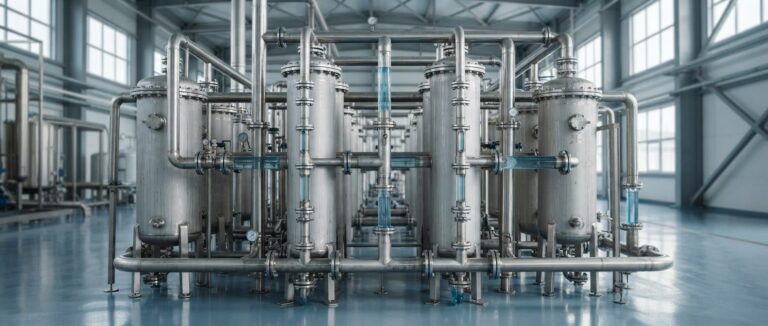
Reverse osmosis and ammonia stripping reduce the initial pollutant load.

AI
02

The innovative heart (hydroxyapatite)

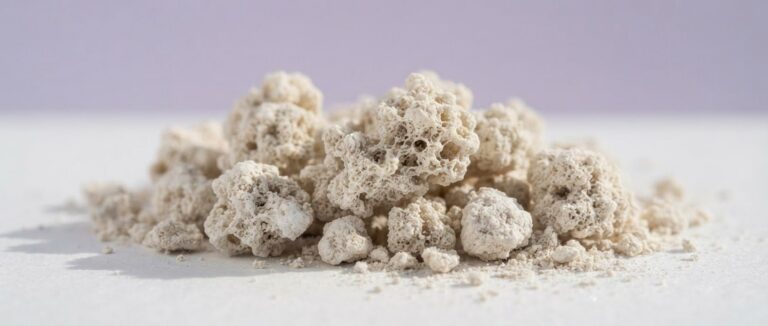
and the water comes into contact with SPECIAL FILTER HEAPS OF HYDROXIDE CALCIUM (HAp), which have a very high absorption power to “capture” PFAS and drugs.
AI
03

Phytodepuration

The water passes through special tanks where plants and microorganisms complete the treatment naturally before being discharged into the environment.

CIRCULAR ECONOMY

Nature that fuels technology

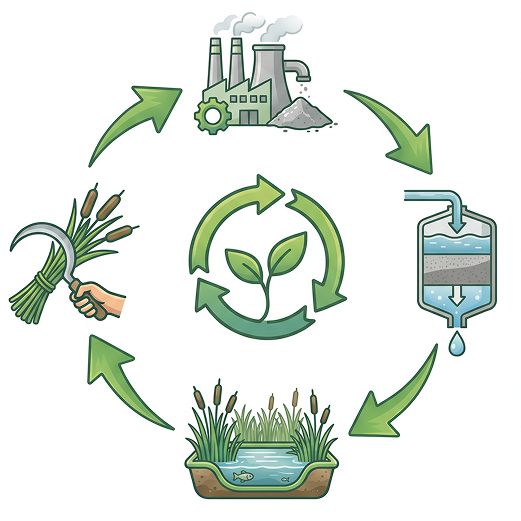
The real revolution of LIFE NEOPHYTA is the total application of the circular economy, in which there are no waste products.

Economia circolare

PRODUCTION OF ASHES

Tampieri produces energy and ash rich in apatite (HAp) through a biomass power plant.

FITORIMEDIO

After the initial filtration treatments with the ash, the water is conveyed into the phyto-remediation system.

REUSE OF THE ASHES

The ashes are not disposed of but reused to eliminate specific effluents (PFAS) and for air purification (VOCs and odors).

PLANT CUTTING

The periodic clippings of the plants involved in the phyto-remediation system are reused as fuel in our biomass plant.

OBJECTIVES
And PERFORMANCE

Designed to process 15,000 cubic meters of wastewater per year, LIFE NEOPHYTA is the first industrial technology capable of reducing pollutants through circular methods:

0 %
the removal of chemical contaminants (PFAS, pesticides, drugs).
0 %
the reduction of Volatile Organic Compounds (VOCs) in the air.
0 %
the removal of organic contaminants (phenols, solvents).
0 %

SAFE REUSE.
The treatment of PFAS does not create hazardous waste. The by-product of the process is fluorapatite, a stable, safe and completely recyclable material for new applications.

The Partners

News

AI
October 21, 2026

LIFE NEOPHYTA presented in Brussels

Davide Tampieri presents LIFE NEOPHYTA in Brussels

On 21 October 2026, Davide Tampieri presented LIFE NEOPHYTA in Brussels at the LIFE25 CEQL Welcome Meeting. The event provided an opportunity to introduce the project, its objectives, and its intended contribution to innovation in wastewater treatment.
refuse.

AI
June 16, 2026

Kick-off meeting

LIFE NEOPHYTA: partners come together for the kick-off meeting

On 16 June 2026, LIFE NEOPHYTA partners came together for the project’s kick-off meeting, providing an initial opportunity to discuss objectives and activities and begin their work together.

AI
June 1, 2026

Life Neophyta has begun

LIFE NEOPHYTA launches: innovation and circularity in wastewater treatment

LIFE NEOPHYTA officially began on 1 June 2026. Co-funded by the European Union under the LIFE Programme, the 42-month project is coordinated by Faenza Depurazioni and involves Tampieri Financial Group, CNR, and Tampieri S.p.A. as an affiliated entity. The project aims to develop and demonstrate an innovative system at industrial scale to remove PFAS and other emerging contaminants from wastewater, combining phytoremediation with adsorbent materials derived from biomass ash in a circular economy approach.
Enter the world
by LIFE NEOPHYTA.

Scroll to Top